
Cold Chain and Ventilated Logistics: How We Export Fresh Shallots to Global Markets
Cold Chain and Ventilated Logistics: How We Export Fresh Shallots to Global Markets 22, May 2026 There is a particular kind of confidence that only comes with time. The confidence to say: we know this product, we know...
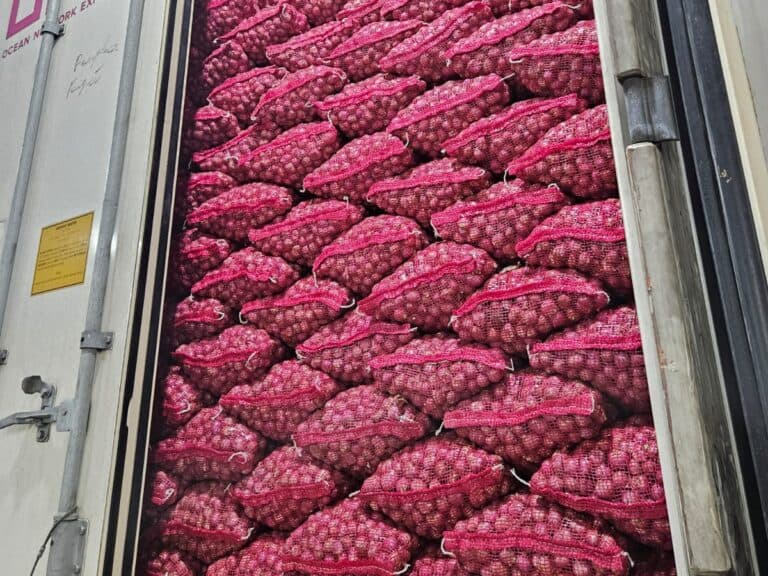
There is a particular kind of confidence that only comes with time. The confidence to say: we know this product, we know what it demands, and we know how to deliver it. Every single time.
For PT. Pratama Spices Indonesia, that confidence has been built over more than 16 years of supplying premium fresh shallots to some of Asia’s most discerning markets.
This is not a story about technology. It is a story about craft, accountability, and a standard that does not move.
The Shallot That Earns Its Reputation
Not all shallots are created equal. The ones we export originate from two of Indonesia’s most prized shallot-growing regions: Bima Regency in West Nusa Tenggara, and Probolinggo in East Java. Both sit on volcanic soil. Both produce bulbs with the size, uniformity, and intensity that international buyers have come to expect from Indonesian shallots, but each brings its own character, and together they give us the sourcing depth to maintain consistent supply year-round.
The aroma is immediate and pronounced. The flavor carries that distinctive sweet-spicy character essential to Southeast and East Asian cooking. Present enough to define a dish, clean enough to not overpower it. The texture is firm and crisp, a sign of low moisture content and proper curing. These are not accidents of geography. They are the result of specific terroir: The mineral-rich volcanic earth of Nusa Tenggara and East Java, combined with farming practices refined across generations.
Indonesia has been growing shallots for a very long time. Our roots in the commodity stretch back to the 1970s. The export operation formally began in 2008, but the knowledge behind it is far older. That history matters. It means that when a buyer places an order, they are not working with a company that is still learning the product. They are working with a company that has been through the cycles: The difficult harvests, the tight shipment windows, the demanding specifications of international markets, and has built systems to handle all of it.
The 28mm Standard: What It Takes to Qualify
Every shallot exported under the PT. Pratama Spices Indonesia name must meet the Super Premium grade: whole, clean, no leaf, with a minimum diameter of 28mm.
That threshold is not arbitrary. A bulb that reaches 28mm has had sufficient time in the ground to develop the dry matter content and essential oil concentration that give the Bima shallot its characteristic intensity. Smaller bulbs may look similar, but they will not perform the same way in the kitchen, and they will not hold up across a long sea voyage.
Achieving consistent 28mm-and-above sizing requires selective sourcing and rigorous sorting. We use a combination of machine and hand sorting to ensure that what goes into each bag meets specification. This is not a single pass at the end of the line. It is an ongoing process of evaluation. Culling anything that falls short in size, surface cleanliness, or structural integrity, so that only the best bulbs make the final pack.
The “Whole, Clean, No Leaf” standard speaks to a similar discipline. Any residual organic matter –a fragment of dried leaf, a trace of soil– creates a point of vulnerability in a product that still has weeks of transit ahead of it. Maintaining this standard is not complicated in principle. In practice, it demands attention, skilled workers, and the willingness to reject those that do not meet the mark.
Three Days to Fill a Container
Here is where the realities of fresh produce exportation become concrete: PT. Pratama Spices Indonesia typically processes a full container of shallots within three days.
That window is not generous. Shallots are living produce. From the moment they are harvested and cured, the clock is running. Not dramatically, but steadily. Weight shrinkage begins. Moisture levels shift. The margin for error narrows with each passing day.
Three days means the sorting floor is efficient. It means the workers are skilled and the workflow is tight. It means quality control is happening in parallel with packing, not as an afterthought. By the time a container is sealed, every bulb inside it has been evaluated against six non-negotiable factors:
- Size: minimum 28mm, sorted by machine and hand
- Color: the deep red that signals maturity and proper curing
- Cleanliness: whole, no leaf, no residual soil or organic matter
- Sorting process: selective enough that substandard bulbs never make the pack
- Packing: handled to protect structural integrity across a long sea voyage
- Shipment temperature: controlled from dispatch to ensure the bulb arrives in the same condition it left
A failure in any one of these shows up at the destination. Getting all six right, consistently, is what separates a reliable exporter from one that occasionally delivers good products.
This is the unglamorous center of the operation, the part that does not appear in a product brochure but determines whether a shipment arrives in good condition or not. Getting it right, consistently, is what separates a reliable exporter from one that occasionally delivers good products.
Why Buyers in Singapore, Malaysia, Thailand, Vietnam, and Japan Keep Coming Back
Trust in the fresh produce trade is earned slowly and lost quickly. A buyer who receives an off-specification shipment does not simply absorb the loss and reorder. They find another supplier.
PT. Pratama Spices Indonesia has maintained active supply relationships across Singapore, Malaysia, Thailand, Vietnam, and Japan for years. The through-line across all of these markets is consistency: uniform sizing, reliable cleanliness standards, and a product that performs the way buyers expect it to perform.
For retail distributors, that consistency is operational. Uniform 28mm-and-above bulbs behave predictably in a retail pack. For food manufacturers and restaurant chains, it is culinary.
A shallot with reliable aroma and flavor intensity is an ingredient they can build a recipe around without compensating for variation. For importers managing supply chains across multiple SKUs, it is logistical. A supplier with fast shipment processing and clear communication reduces the coordination overhead that makes sourcing fresh produce complicated.
These are the practical reasons why buyers return. The deeper reason is simpler: they have learned they can rely on PT. Pratama Spices Indonesia, and reliable partners in international trade are not easy to find.
A Foundation in the Commodity, A Commitment to the Farmers
PT. Pratama Spices Indonesia sources directly from Bima, not through intermediaries, but through relationships with the farmers who grow the product. That directness matters for quality, because it means the company knows what is in the ground before it is harvested.
It matters for sustainability, because it means the company has a direct stake in maintaining the farming practices that make Bima shallots what they are. And it matters for the farmers, who supply a product that meets genuine international demand.
The company’s commitment to sustainable and ethical agriculture is not a marketing position. It reflects a straightforward understanding: the soil of Bima Regency is what produces a shallot with the characteristics that international markets want. Protecting that soil and the farming community that works it is not separate from the business, it is the foundation of it.