
Indonesia Clove Harvest Season 2026: Supply, Quality, and Price Forecast
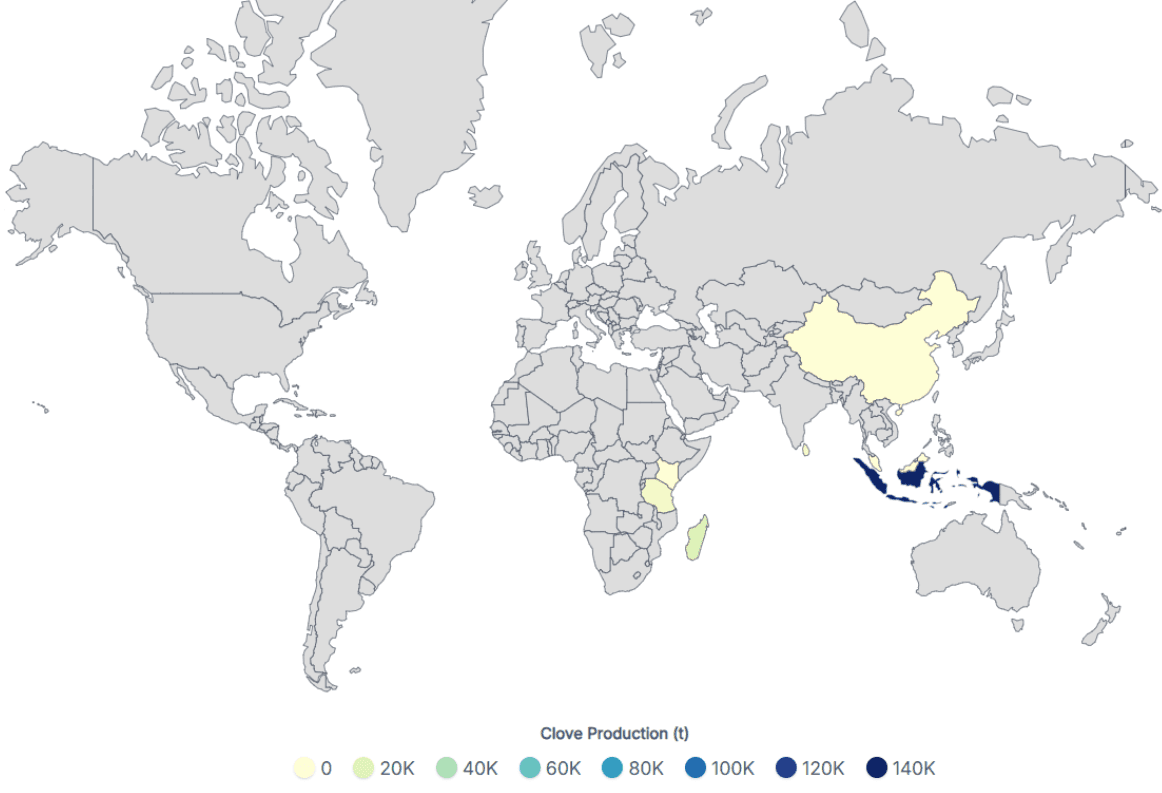
Indonesia Clove Harvest Season 2026: Supply, Quality, and Price Forecast 31, March 2026 The global clove market in 2026 is centered entirely on Indonesia. As the world’s largest producer, Indonesia controls roughly 62...
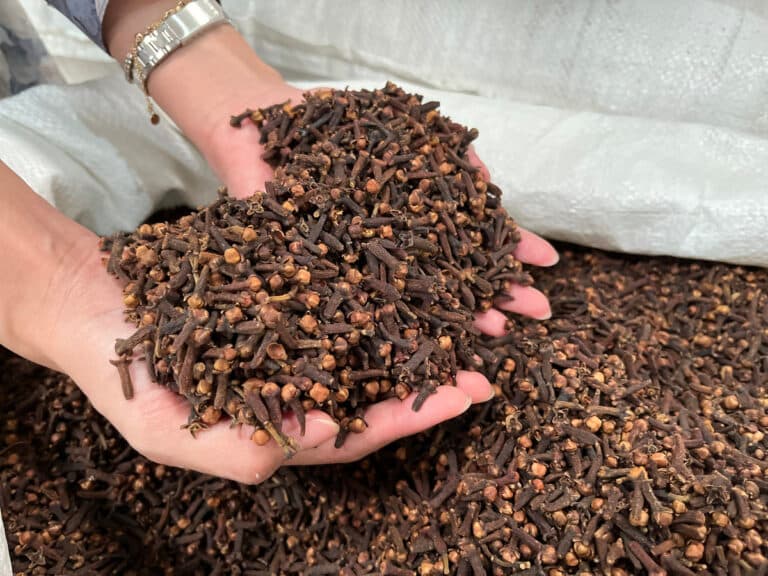
The global clove market in 2026 is centered entirely on Indonesia. As the world’s largest producer, Indonesia controls roughly 62% of the global supply. However, for international buyers, the challenge isn’t just how much is grown, it’s how much is left over.
Indonesia is a “Sovereign Consumer.” This means that while they grow the most cloves, they also use the most. Nearly 90% of all Indonesian cloves are swallowed up by the domestic kretek (clove cigarette) industry. To keep up with demand, Indonesian manufacturers need to produce over 300 billion cigarettes every year.
After several years of poor harvests due to “La Niña” weather patterns (2022–2024), 2026 is a recovery year. But because the local industry is so hungry for supply, global buyers must act fast to secure what remains.
The Harvest Map
Indonesia’s clove production is distributed across several key provinces, each offering distinct quality profiles and harvest windows. The heartland remains the Maluku Archipelago, often referred to as the “Spice Islands.”
However, commercial volume is heavily concentrated in the regions of Sulawesi and Java, which together provide the bulk of the exportable FAQ (Fair Average Quality) and Lalpari grades.
| Province | Primary Districts | Estimated Peak Harvest | Quality Profile |
| Maluku | Ambon, Masohi, Ternate | July – September | High Oil, Premium Lalpari |
| South Sulawesi | Luwu, Bulukumba, Sinjai | June – August | High Volume, Consistent FAQ |
| Central Sulawesi | Tolitoli, Parigi Moutong | June – July | Industrial Grade, Essential Oil |
| East Java | Trenggalek, Pacitan | May – August | Export Standard, Low Moisture |
| West Sumatra | Padang Pariaman | April – June | Strong Aroma, Early Season |
Meteorological conditions in 2026 are forecast by the Meteorology, Climatology, and Geophysics Agency (BMKG) to be “normal,” a significant relief for a sector that has been plagued by unseasonal rainfall in recent years. The transition from a weak La Niña phase to a Neutral ENSO (El Niño-Southern Oscillation) condition is expected to be completed by the end of the first quarter of 2026.
The Impact of Normal Rainfall on Quality
BMKG predicts that 94.7 percent of Indonesia will experience annual rainfall within the normal range of 1,500 mm to 4,000 mm. For clove producers, “normal” is the ideal scenario.
Excessive rainfall during the flowering stage can cause the buds to drop or “bloom” prematurely, rendering them useless for the spice trade, which requires unopened buds. Conversely, too little rain can stunt bud growth and reduce essential oil concentration.
The primary benefit of the 2026 forecast is the stability of the dry season (July – September). During this period, rainfall is expected to be in the low to medium category across East Java, Bali, and the Nusa Tenggara regions.
This stability is critical for sun-drying, the preferred processing method in Indonesia. Sun-drying allows for a slow, natural reduction in moisture, which preserves the “cellular integrity” and “surface luminescence” of the buds, key markers for the Lalpari grade.
Moisture management is the single most important factor in determining the landed value of cloves. Standard export norms require a moisture content below 12 percent, while premium buyers often demand levels between 6 percent and 10 percent.
In 2026, the anticipated normal dry season should allow farmers to achieve these targets without the need for mechanical drying, which can sometimes “burn” the volatile oils and dull the color of the cloves. However, BMKG warns of potential “extreme hydrometeorological phenomena” like flash floods in West and Central Java during the early harvest weeks (May/June), which could pose a risk of mold if infrastructure is not prepared.
Price Analysis and 2026 Forecast
The clove market in 2026 is characterized by a “notable turnaround in price action,” moving away from the softening seen in the early 2020s toward a firm and elevated regime. Some of the drivers for this potential elevation includes:
- Low Inventories: Both Indonesia and Madagascar entered 2026 with stocks at multi-season lows. The underwhelming harvests of the previous two years meant that there was minimal carryover to buffer the transition into the new crop.
- Currency Pressures: While the Indonesian Rupiah (IDR) remains volatile, the “Currency Volatility Protection” offered by major export houses and Tier-1 banking partnerships helps insulate international margins, though it often results in higher base quotes in USD.
- Domestic Demand Inelasticity: The kretek industry provides a solid floor for pricing. If global prices drop below domestic parity, Indonesian producers simply redirect their supply to the cigarette manufacturers, effectively capping downside risk.
| Year | Estimated Export Price (USD/ton) | Notes |
| 2021 | ~6,500 – 7,500 | Strong rebound; prices surged (~30–36%) after pandemic disruptions (IndexBox) |
| 2022 | ~6,800 – 7,800 | Continued high demand; supply constraints |
| 2023 | ~7,100 (peak) | Peak average export price globally / Indonesia (IndexBox) |
| 2024 | ~7,000 | Slight decline after peak; stabilization (IndexBox) |
| 2025 | ~5,300 – 7,800 | Wider range depending on origin & quality |
Buying Bulk Cloves: The Strategic Pre-Order Window
Given the supply tightness and the logistical complexities of the 2026 season, the timing of a mass pre-order is critical for securing both volume and price stability. The most effective time to conduct a mass pre-order for the 2026 crop is between
July and September. This window is supported by several factors:
- Supply Peak: This period aligns with the peak harvest in Sulawesi and Maluku, the two highest-volume regions. The sudden influx of new-crop material often leads to a temporary softening or stabilization of prices before the kretek industry can fully absorb the surplus.
- Quality Certainty: Sun-drying conditions are historically at their best in August across Java and Sulawesi. Buds harvested and dried during this window are most likely to meet the <10% moisture and bright color specifications for Lalpari.
- Logistical Efficiency: By July, the shipping disruptions common in the rainy season (January – March) have generally subsided. The major export hubs of Surabaya and Jakarta are at their most efficient, and the “Prime-Slot” allocation for container berthing is more predictable.
Conversely, the “off-season” months of February to April are the least favorable for pre-ordering. During this time, stocks are at their lowest, and prices typically spike as buyers compete for the remaining old-crop inventories.
Secure Your 2026 Clove Supply Early
As Indonesia enters a recovery harvest with tight global availability, timing and sourcing strategy will define your margins for the year.
PT Pratama Spices Indonesiaworks directly with farmer networks across Sulawesi, Java, and Maluku to ensure consistent volume, verified moisture levels, and export-grade sorting. For importers seeking to acquire premium Lalpari cloves, our team can help you:
- Lock in competitive early-season pricing
- Secure priority allocation during peak harvest
- Streamline export logistics from Surabaya
Frequently Asked Questions About Cloves Harvest Season 2026
When is clove harvest season in Indonesia?
Clove harvest season in Indonesia typically runs from April to September, with peak production occurring between July and September in major regions like Sulawesi and Maluku.
Why is Indonesia so important in the global clove market?
Indonesia produces around 60%+ of global cloves, making it the dominant supplier. However, most of its production is consumed domestically by the kretek cigarette industry, limiting export availability.
What is Lalpari clove quality?
Lalpari refers to premium-grade cloves characterized by:
- Low moisture content (6–12%)
- High oil content
- Dark brown color with natural shine
- Intact, unopened buds
Source: Lalpari Cloves (https://pratamaspicesid.com/reliant/lalpari-cloves/)
What moisture level is ideal for export cloves?
Export-grade cloves typically require:
- <12% moisture (standard export)
Lower moisture ensures longer shelf life, better aroma retention, and reduced mold risk.
How does weather affect clove quality?
Weather plays a critical role:
- Excess rain → premature flowering, mold risk
- Drought → smaller buds, lower oil content
- Stable dry season → optimal sun-drying and higher quality
What is the best time to buy cloves from Indonesia?
The best time to secure bulk cloves is July to September, when:
- Supply is at its peak
- Prices stabilize temporarily
- Quality is highest due to ideal drying conditions
Why are clove prices expected to rise in 2026?
Prices are supported by:
- Low global inventories from prior weak harvests
- Strong domestic demand in Indonesia
- Limited export surplus
- Currency and logistics factors
- Geopolitical uncertainty