Kalimantan White Pepper: The Sustainable Alternative to Muntok for Global Buyers
Why Kalimantan White Pepper is Becoming a Sustainable Alternative to Muntok for Global Buyers 09, Mar 2026 For more than a century, the global spice trade has relied on a single benchmark for white pepper: Muntok Whit...
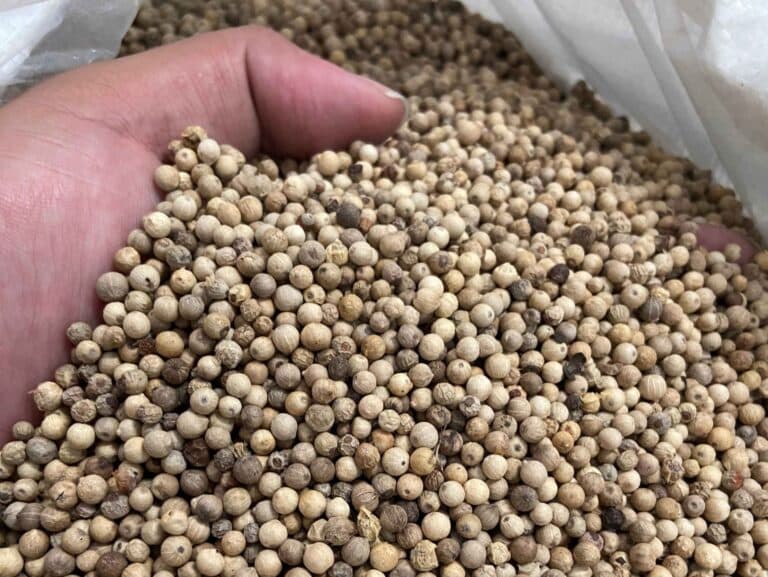
For more than a century, the global spice trade has relied on a single benchmark for white pepper: Muntok White Pepper (MWP) from Bangka Belitung, Indonesia. Known for its high density and refined heat, Muntok has long been considered the gold standard of white pepper in international markets.
However, structural changes in Indonesia’s agricultural landscape are reshaping the supply chain. As traditional production centers face mounting pressures, Kalimantan is rapidly emerging as the next strategic frontier for white pepper sourcing, offering global buyers a more stable, scalable, and ESG-aligned alternative.
For procurement managers and food manufacturers navigating an increasingly volatile spice market, the rise of Kalimantan-origin white pepper represents both a risk mitigation strategy and a long-term sourcing opportunity.
The Structural Decline of Muntok White Pepper Supply
The Bangka Belitung Islands, historically the heart of Muntok white pepper production, are facing a structural transformation driven by intense competition between agriculture and tin mining.
For decades, pepper farming and mining have competed for the same critical resources:
- Land
- Labor
- Water
- Capital investment
Tin mining, being far more lucrative in the short term, has steadily drawn farmers away from pepper cultivation. As a result, many plantations have been abandoned or converted to mining sites.
In early 2025, industry reports indicated that Muntok material availability had become extremely tight, with processors forced to release unprocessed pepper simply to meet market demand.
The supply shock quickly translated into price volatility. Within a single year, Muntok white pepper prices surged by 55–60%, reflecting severe scarcity across the supply chain.
Read more: Spices Market Overview | April 2025 | Mane Kancor, accessed on March 8, 2026
According to recent crop monitoring data, pepper vine mortality rates in traditional growing regions reached approximately 9% between 2021 and 2023, indicating a gradual erosion of the production base.
For large spice factories and seasoning manufacturers, this trend raises a fundamental question:
How sustainable is the global dependence on a single origin?
Read more: Pepper Crop Report 2024 – Nedspice, accessed on March 8, 2026
Kalimantan: Indonesia’s Emerging White Pepper Powerhouse
While Bangka faces structural constraints, Kalimantan is quietly expanding its role as a major white pepper producing region.
Across Indonesia’s pepper landscape:
| Region | Share of National Production | Trend (2023-2025) | Primary Product Type |
| Lampung | 34% | Declining / Stable | Black Pepper |
| Bangka Belitung | 25% | Sharp Decline | Muntok White Pepper |
| Kalimantan | 15% | Increasing / Emerging | White & Organic Pepper |
| South Sulawesi | Emerging | Stable | White Pepper |
| Other Regions | 26% | Fluctuating | Various |
Data synthesized from: Indonesia Black Pepper: Suppliers & Market Trends – Tridge, accessed on March 8, 2026.
Unlike Bangka, Kalimantan’s pepper farms are largely located in fertile inland agricultural zones with minimal mining conflict, allowing farmers to maintain long-term cultivation without the land-use pressures seen in Bangka.
The region also benefits from:
- abundant rainfall
- fertile soil conditions
- expanding smallholder farming networks
- increasing export-oriented processing infrastructure
For international buyers, Kalimantan offers something increasingly rare in today’s spice market: production stability combined with expansion potential.
Quality Benchmark: Can Kalimantan Rival Muntok?
For global spice manufacturers, origin shifts are not determined by geography alone. They are driven by technical performance.
White pepper quality is typically evaluated through three key industrial parameters:
- Bulk Density
- Piperine Content
- Essential Oil Content
Historically, Muntok has dominated in density, with premium grades reaching 630 g/l or higher.
However, recent export-grade material from Kalimantan demonstrates that the region is now capable of meeting or approaching these benchmarks.
| Quality Parameter | Muntok White Pepper (Standard) | Kalimantan White Pepper (Premium) | IPC Grade 1 Standard |
| Bulk Density | 610 – 630 g/l | 600 g/l min | 600 g/l |
| Piperine Content | > 6.0% | 5.4% – 6.0% | 4.0% |
| Volatile Oil | 1.5% – 2.5% | 2.4% | 1.5% |
| Moisture Content | 12% – 14% max | 10% – 13% | 13% |
| Extraneous Matter | < 1.0% | 0.5% | 1.0% |
| Color | Ivory White | Yellowish White to White | White/Off-White |
Reference: White Pepper Indonesia – PT Pratama Spices Indonesia, accessed on March 8, 2026.
From a technical standpoint, Kalimantan white pepper comfortably exceeds IPC Grade 1 requirements and meets the performance standards required by most global spice factories.
For many buyers, the slight difference in peak piperine levels compared to top-grade Muntok batches is outweighed by Kalimantan’s greater consistency and supply stability.
Market Dynamics: The Cost of Scarcity
Global pepper markets are currently experiencing tightening supply conditions.
In 2024, global pepper production declined by approximately 4%, marking the fourth consecutive year of stock drawdowns.
At the same time, Muntok scarcity has pushed prices into speculative territory.
As of early 2025, the International Pepper Community (IPC) reported Muntok white pepper prices exceeding USD 10,000 per metric ton.
Such price levels reflect a market driven more by scarcity than by production cost.
For procurement teams responsible for maintaining stable input costs, this volatility presents a serious challenge.
In contrast, Kalimantan-origin white pepper offers:
- lower land-use conflict
- expanding cultivation areas
- more predictable supply
- competitive pricing relative to Muntok
As a result, many international buyers are increasingly diversifying their sourcing portfolios, integrating Kalimantan material alongside traditional origins.
The Role of Export Processors
The rise of Kalimantan pepper would not be possible without modern export processors capable of bridging traditional farming systems with global food safety requirements.
Leading exporters are now integrating:
- advanced cleaning and sorting technology
- color sorting systems
- controlled drying processes
- international food safety compliance
Among these exporters is PT Pratama Spices Indonesia, which has positioned itself as a specialist in export-grade Indonesian spices.
By building partnerships with smallholder farmers in Kalimantan and implementing rigorous quality control systems, the company supplies white pepper that consistently meets international technical specifications.
Notably, Kalimantan-origin material processed by PT Pratama Spices Indonesia regularly achieves essential oil levels around 2.4%, a strong indicator of aromatic quality for industrial applications.
Strategic Recommendation for Global Buyers
In today’s increasingly unpredictable agricultural markets, reliance on a single origin carries significant risk.
For procurement officers, spice importers, and seasoning manufacturers, Kalimantan white pepper offers a strategic opportunity to diversify supply chains while maintaining technical performance standards.
Compared to the increasingly volatile Muntok market, Kalimantan provides:
- greater supply stability
- expanding production capacity
- competitive pricing
- strong industrial specifications
Forward-looking buyers are therefore advised to begin integrating Kalimantan-origin white pepper into their sourcing strategies.
PT Pratama Spices Indonesia invites global partners to request:
- full technical specification sheets
- laboratory analysis reports
- physical samples for comparative testing
and explore how Kalimantan white pepper can support a more resilient and sustainable global spice supply chain.
Frequently Asked Questions About Kalimantan White Pepper
What is Kalimantan white pepper?
Kalimantan white pepper refers to white pepper produced in the Kalimantan region of Indonesia, particularly in areas of West Kalimantan where pepper cultivation has been expanding in recent years. The pepper is processed from fully ripe pepper berries that are soaked and dried to remove the outer skin, producing the characteristic ivory-colored peppercorn used in global food manufacturing.
How does Kalimantan white pepper compare to Muntok white pepper?
Muntok white pepper from Bangka Belitung has long been considered the international benchmark for quality. However, Kalimantan white pepper is increasingly comparable in terms of key technical specifications such as bulk density, piperine content, and volatile oil levels. Many export-grade batches from Kalimantan meet international standards used by spice processors and food manufacturers.
What is the typical piperine content of Indonesian white pepper?
Piperine content is one of the primary indicators of pepper pungency. Export-grade Indonesian white pepper typically contains between 4% and 6% piperine, depending on origin, harvest conditions, and processing methods. Higher piperine levels generally indicate stronger flavor intensity for culinary and industrial applications.
Why are buyers exploring alternatives to Muntok white pepper?
Global buyers are increasingly diversifying their sourcing due to several factors affecting traditional production regions, including land-use competition, declining yields, and supply volatility. As a result, emerging production areas such as Kalimantan are gaining attention as additional sources of export-grade white pepper.
What quality standards apply to white pepper exports?
International spice buyers often refer to standards set by organizations such as the International Pepper Community and the American Spice Trade Association. These standards typically evaluate parameters including:
- Bulk density
- Piperine content
- Moisture levels
- Volatile oil concentration
- Extraneous matter
Meeting these benchmarks helps ensure consistent quality for large-scale food production.
Is Kalimantan suitable for large-scale white pepper sourcing?
Kalimantan has become increasingly relevant for international sourcing due to its expanding cultivation areas and improving post-harvest processing infrastructure. While Bangka Belitung remains historically important for white pepper exports, Kalimantan is emerging as an additional production hub that may support more diversified supply chains.